Accelerating Africa’s Research & Innovation through Diaspora Partnerships

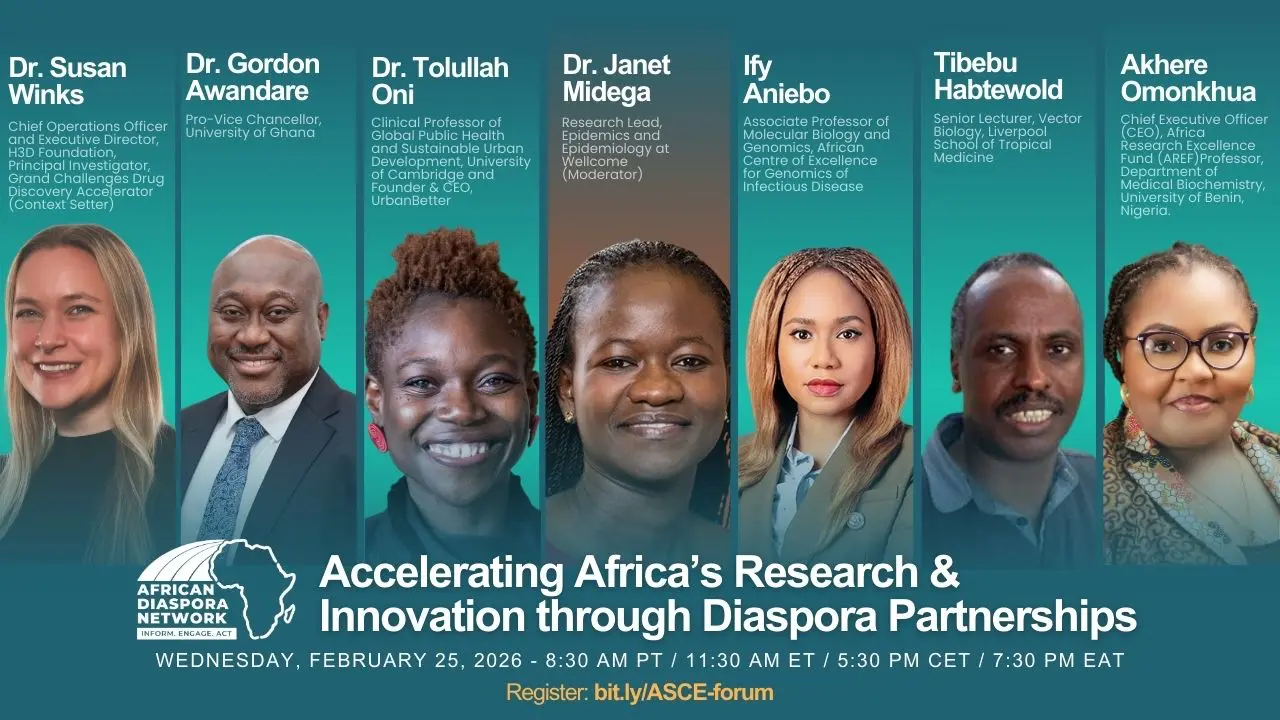
ASCE Feb25 Event Banner-new

Overview:

The African Diaspora Network (ADN) convened leading scientists, policymakers, and institutional leaders for a virtual dialogue on Wednesday, February 25th 2026 on Accelerating Africa’s Research and Innovation through Diaspora Partnerships. The conversation highlighted how Africa’s global scientific diaspora can play a transformative role in strengthening research capacity, fostering innovation, and advancing solutions to global challenges.

Esteemed speakers emphasized that Africa possesses extraordinary scientific talent and emerging research excellence, yet structural barriers – such as limited infrastructure, fragmented collaboration, and uneven funding – continue to constrain progress. By strengthening collaboration between African institutions and diaspora scientists, these challenges can be addressed through shared knowledge, joint research initiatives, and strategic investment.

Panelists shared practical examples of successful diaspora engagement; from mentorship and research exchanges to joint laboratories, collaborative funding models, and institutional partnerships. The discussion underscored the need to move beyond ad-hoc engagement toward structured, long-term collaboration frameworks that embed diaspora partnerships within national and institutional research strategies.

Ultimately, the conversation reinforced that diaspora engagement is not simply about talent return, it is about mobilizing Africa’s global intellectual capital to co-create solutions to global challenges, strengthen research ecosystems, and position Africa at the forefront of scientific discovery and innovation.


Key Takeaways:

  1. Africa must move from “catch-up science” to global leadership in innovation. Panelists emphasized that Africa has the talent to lead groundbreaking research and scientific discovery. With the right investments and partnerships, African scientists can pioneer solutions to global challenges rather than simply adopt innovations developed elsewhere.
  2. Diaspora scientists are a powerful catalyst for research capacity and innovation. Africa’s diaspora represents a vast pool of expertise, networks, and leadership experience that can accelerate research development, mentorship, and institutional strengthening across the continent.
  3. Long-term institutional partnerships are essential. Sustainable collaboration requires moving beyond short-term engagements toward structured, institutionalized partnerships embedded in national research strategies and university frameworks.
  4. Mentorship and knowledge exchange are high-impact entry points. Mentorship programs, visiting scholar exchanges, and collaborative training initiatives provide accessible ways for diaspora scientists to engage while strengthening the next generation of African researchers.
  5. Research infrastructure is critical to unlocking Africa’s scientific potential. Access to modern laboratories, data platforms, and shared research facilities is essential for converting Africa’s scientific talent into high-impact research outcomes.
  6. Flexible engagement pathways are needed for diaspora collaboration. Effective diaspora engagement should include multiple models—short-term fellowships, joint appointments, collaborative research projects, and remote mentorship—to accommodate different levels of involvement.
  7. Strategic funding and enabling policies are required to scale impact. Governments, funders, and institutions must develop targeted funding mechanisms, reduce bureaucratic barriers, and create supportive policy environments that incentivize diaspora collaboration.
Dr. Susan Winks
Chief Operations Officer and Executive Director, H3D Foundation, Principal Investigator, Grand Challenges Drug Discovery Accelerator (Context Setter)
Janet Midega
Dr. Janet Midega
Research Lead, Epidemics and Epidemiology at Wellcome (Moderator)
Ify Aniebo
Ify Aniebo
Associate Professor of Molecular Biology and Genomics, African Centre of Excellence for Genomics of Infectious Disease
Dr. Gordon Awandare
Dr. Gordon Awandare
Pro-Vice Chancellor, University of Ghana
Akhere Omonkhua
Akhere Omonkhua
Chief Executive Officer (CEO), Africa Research Excellence Fund (AREF)Professor, Department of Medical Biochemistry, University of Benin, Nigeria.
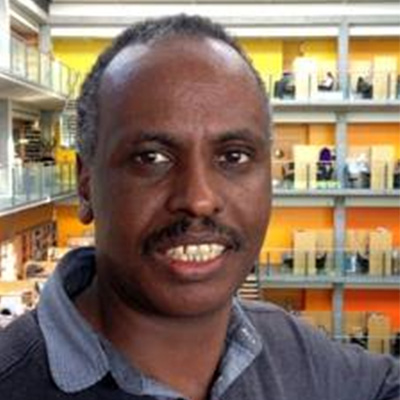
Tibebu Habtewold

Tibebu Habtewold

Senior Lecturer, Vector Biology, Liverpool School of Tropical Medicine
Dr. Tollulla Oni
Dr. Tolullah Oni
Clinical Professor of Global Public Health and Sustainable Urban Development, University of Cambridge and Founder & CEO, UrbanBetter