
Introduction: The People Behind the Movement
Over five days at the 2026 Grand Challenges Annual Meeting hosted by the Gates Foundation, ADN convened participants of Grand Challenges–African Diaspora Engagement Accelerator (GC-ADEA). The program, in partnership with Gates, brings together a remarkable community of African and diasporan scientists, physicians, entrepreneurs, investors, philanthropists, university leaders, and global health practitioners. These individuals are united by a common conviction: that Africa’s future health breakthroughs will be accelerated when the continent’s talent and its diaspora work together as one ecosystem.
,,
Across private dinners, advisory council meetings, roundtables, side conversations, and informal gatherings, a shared narrative emerged: Africa possesses the talent required to solve many of its most pressing health challenges. The question is no longer whether that talent exists. The question is how to connect, mobilize, and support it.
At the center of these conversations was ADN’s Grand Challenges – African Diaspora Engagement Accelerator (GC-ADEA)’s guiding principle: brain circulation.
The future does not require Africa’s brightest minds to choose between contributing globally and contributing locally. Through intentional collaboration, expertise can move across borders, institutions, and generations.
Leadership Matters: ADN’s GC-ADEA Advisory Council
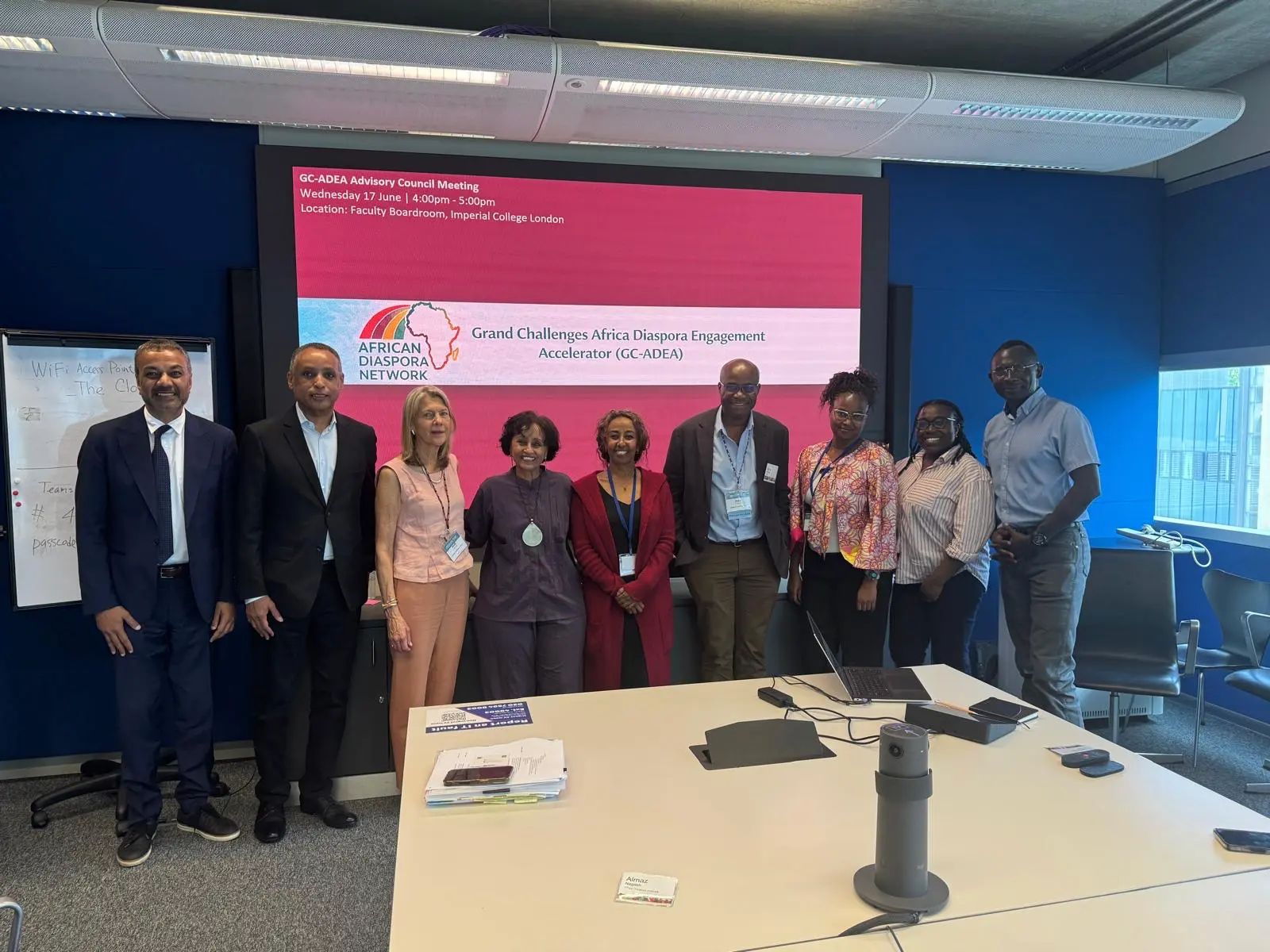
A major highlight of the week was the gathering of the GC-ADEA Advisory Council, whose members include some of the most respected voices across science, healthcare, innovation, philanthropy, and investment.
Under the leadership of ADN Board Chair Josh Ghaim and Scientific Advisor Dr. Fredros Okumu, the Council challenged itself to think beyond individual programs and toward the systems required to sustain African scientific excellence. Discussions focused on building durable infrastructure for collaboration, strengthening institutional partnerships, expanding access to funding, and ensuring that African and diaspora scientists are positioned not merely as participants in global health innovation but as leaders shaping its future.
The Advisory Council reaffirmed that GC-ADEA’s greatest opportunity lies in its ability to convene across sectors. Few platforms can bring together researchers, entrepreneurs, investors, philanthropists, and policymakers around a shared vision. GC-ADEA is uniquely positioned to serve as that bridge.
From Conversation to Commitment
- How do we create mentorship pathways between African and diasporan experts and researchers
- How do we facilitate secondments and reverse placements?
- How do we connect African institutions with global expertise?
- How do we mobilize capital to support African-led innovation?
- How do we ensure that scientific breakthroughs developed for Africa are increasingly developed in Africa?
The answers are still emerging, but the commitment is real.
By week’s end, technical working groups were beginning to form, institutional partnerships were advancing, and support for GC-ADEA’s next phase was stronger than ever. What began as a series of gatherings evolved into something more significant: a growing movement of people committed to advancing Africa’s health innovation ecosystem together.
,,
From Momentum to Movement: What Comes Next
- GC-ADEA Hub launches Summer 2026: This dynamic matchmaking platform connects African institutions, diaspora scientists, funders, and innovators around specific collaboration opportunities, far more than a directory.
- Deepening institutional partnerships: Strong interest is confirmed from University of Cape Town; University of Ghana; Imperial College London; Stanford; University of California, San Francisco; and Liverpool School of Tropical Medicine.
- Flagship case studies in development: This begins with Africa’s drug discovery ecosystem (30+ expert interviews), followed by vaccine manufacturing, biologics, and emerging technologies.
- ADIS27 in Africa: The first African Diaspora Investment Symposium on African soil will be a platform for partnership announcements, investment mobilization, and a showcase of Africa’s talent pipeline across science, innovation, and entrepreneurship.
- The ask: Join the Hub. Mentor. Collaborate. Invest. Share ADN’s story. The diaspora is not a spectator of Africa’s future; it is one of its greatest assets.
The People We are Grateful For
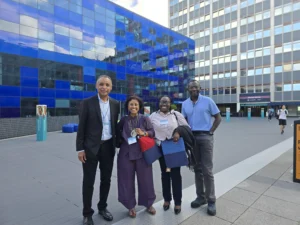
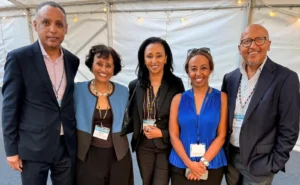
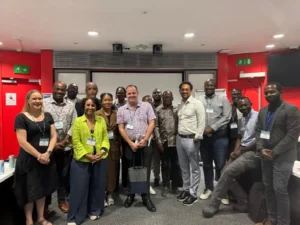
2026 Grand Challenges Annual Meeting Photo Gallery
As we reflect on five extraordinary days in London, we are reminded that GC-ADEA is not fundamentally about programs, platforms, or meetings. It is about individuals who believe that Africa’s future can be strengthened when talent, knowledge, and opportunity flow across borders.
We extend our deepest gratitude to the Gates Foundation for its vision and partnership in launching and supporting GC-ADEA. We thank Kedest Tesfagiorgis and the Grand Challenges team for their leadership, trust, and unwavering commitment to ensuring that African and diaspora scientists are meaningfully engaged in shaping the future of health innovation.
We are grateful to the members of the GC-ADEA Advisory Council, whose wisdom, experience, and generosity continue to guide this work. Their willingness to challenge assumptions, elevate possibilities, and invest their time and expertise has helped transform GC-ADEA from an idea into a movement.
Special appreciation goes to ADN Board Chair Josh Ghaim, whose steadfast leadership and belief in the power of diaspora engagement have helped shape GC-ADEA from its earliest days. We thank Dr. Kelly Chibale and Dr. Amadou Sall, two of Africa’s most respected scientific leaders, for sharing their perspectives, challenging our thinking, and inspiring participants throughout the week. Their voices reminded us that scientific excellence, innovation, and impact are already present across the continent—and that our collective responsibility is to create the systems that allow them to flourish.
We are thankful to Dr. Yaw Bediako, co-founder and CEO of Yemaachi Biotech; Dr. Menghis Bairu, co-founder and CEO of Bio Usawa; and Prof. Collen Masimirembwa, founder of the African Institute of Biomedical Science and Technology: three extraordinary scientist-entrepreneurs whose vision, candor, and commitment to Africa’s health innovation future shaped the conversations across this entire week.
To the scientists, physicians, entrepreneurs, investors, philanthropists, university leaders, and changemakers who joined us in London—thank you. Your willingness to engage openly, build new relationships, and explore bold possibilities embodies the spirit of brain circulation that lies at the heart of GC-ADEA.
Finally, my thanks and appreciation to the ADN team. To Dr. Fredros Okumu, Nicholas Bassey, Omolayo Oyudo, Faduma Mohamed, Fatima Diallo, Yinka Djin, and our extended network of partners and advisors—thank you for your dedication, creativity, and tireless efforts behind the scenes. Bringing together a community of this caliber requires both vision and execution, and your contributions made this week possible.
London reminded us that the future of African health innovation will not be built by any one institution, funder, or individual. It will be built by a community.
With appreciation,